The Scoville Scale, Explained
The Scoville scale measures chilli heat in Scoville heat units (SHU). A bell pepper is 0 SHU, a typical jalapeño about 5,000 SHU, and the hottest verified pepper, Pepper X, 2,693,000 SHU. The scale is linear: double the SHU means double the heat compounds.
Data checked October 20, 2026 · How we rank and verify
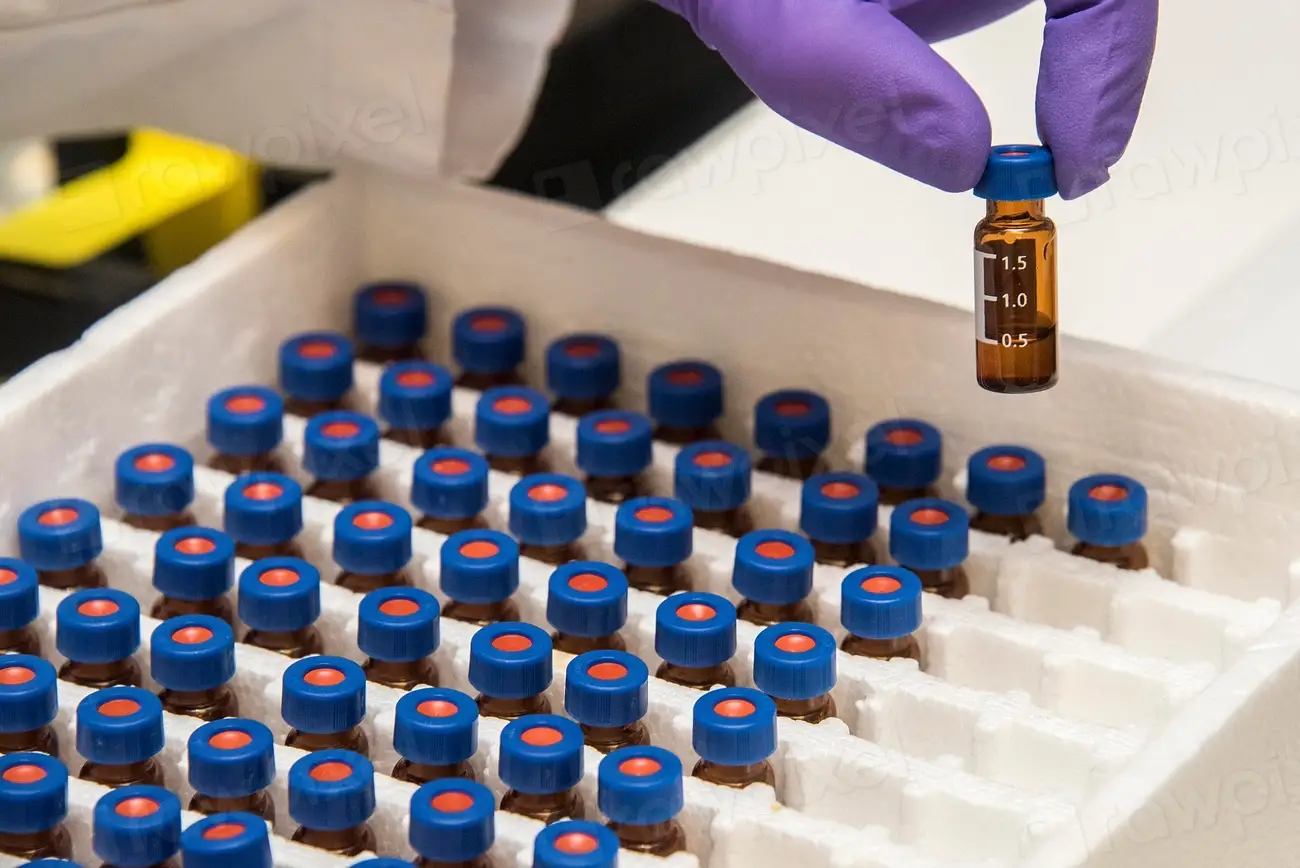
How heat is measured
Pharmacist Wilbur Scoville devised the original test in 1912: an extract of dried pepper was diluted in sugar water until a panel of tasters could no longer detect any heat, and the dilution factor became the rating. The method depended on human tasters and gave inconsistent results. [3]
Labs now use high-performance liquid chromatography (HPLC) to measure capsaicinoids, the compounds that cause the burn, in dried, ground fruit. The result in parts per million is multiplied by about 15–16 to convert it to SHU; New Mexico State University uses ×16. [1]
Linear, not logarithmic
Unlike the Richter scale, the Scoville scale is linear. Pepper X at 2,693,000 SHU is about 1.6× as hot as the Carolina Reaper at 1,641,183 SHU, not 3× as some reports said. Read the myth-buster.
Why ratings vary
Heat varies with genetics and growing conditions, and stressed plants tend to run hotter. In a 2012 New Mexico State University study, individual plants of a single variety ranged up to about twice the variety's average. [2] A single number is only a guide.
| Pepper | Typical heat (SHU) | Measured range | vs jalapeño | Status |
|---|---|---|---|---|
| Pepper X | 2,693,000 | 2,693,000 SHU | 539× | Guinness record |
| Dragon's Breath | 2,480,000 | up to 2,480,000 SHU | 496× | Unverified |
| Carolina Reaper | 1,641,183 | up to 2,200,000 SHU | 328× | Guinness record |
| Trinidad Scorpion Butch T | 1,463,700 | 800,000–1,463,700 SHU | 293× | Guinness record |
| 7 Pot Primo | 1,400,000 | up to 1,473,480 SHU | 280× | Breeder claim |
| Komodo Dragon | 1,400,000 | up to 1,400,000 SHU | 280× | Breeder claim |
| Naga Viper | 1,382,118 | 1,382,118 SHU | 276× | Guinness record |
| Trinidad Moruga Scorpion | 1,200,000 | up to 2,000,000 SHU | 240× | Lab tested |
| Infinity | 1,176,182 | 1,067,286–1,176,182 SHU | 235× | Guinness record |
| 7 Pot Brain Strain | 1,175,000 | 1,000,000–1,350,000 SHU | 235× | Breeder claim |
| 7 Pot Douglah | 1,170,000 | 923,889–1,853,986 SHU | 234× | Lab tested |
| Dorset Naga | 1,032,310 | 661,451–1,598,227 SHU | 206× | Breeder claim |
| Ghost Pepper | 1,001,304 | 855,000–1,041,427 SHU | 200× | Lab tested |
| Naga Morich | 1,000,000 | 800,000–1,500,000 SHU | 200× | Breeder claim |
| Dalle Khursani | 393,950 | 304,863–456,636 SHU | 79× | Lab tested |
| Fatalii | 262,500 | 125,000–400,000 SHU | 53× | Unverified |
| Red Savina | 248,556 | 248,556–577,000 SHU | 50× | Guinness record |
| Habanero | 225,000 | 100,000–350,000 SHU | 45× | Lab tested |
| Scotch Bonnet | 225,000 | 100,000–350,000 SHU | 45× | Lab tested |
| Datil | 200,000 | 100,000–300,000 SHU | 40× | Lab tested |
| Kanthari | 80,640 | 80,640 SHU | 16× | Lab tested |
| Bird's Eye Chilli | 75,000 | 50,000–100,000 SHU | 15× | Lab tested |
| Cayenne | 40,000 | 25,000–50,000 SHU | 8× | Lab tested |
| Tabasco | 40,000 | 30,000–50,000 SHU | 8× | Lab tested |
| Guntur Chilli | 36,160 | 35,000–40,000 SHU | 7.2× | Lab tested |
| Kashmiri Chilli | 20,800 | 20,800–52,000 SHU | 4.2× | Lab tested |
| Serrano | 15,000 | 5,000–25,000 SHU | 3× | Lab tested |
| Byadgi Chilli | 10,000 | 5,000–15,000 SHU | 2× | Lab tested |
| Jalapeño | 5,000 | 2,500–8,000 SHU | 1× | Lab tested |
Questions
What does SHU mean?
Scoville heat units. The number originally meant how many times a pepper extract had to be diluted in sugar water before tasters could no longer detect the heat. Today labs measure capsaicinoids directly and convert to SHU.
Is the Scoville scale logarithmic?
No, it is linear. A pepper at 2,000,000 SHU is twice as hot as one at 1,000,000 SHU, not ten times. Some news reports got this wrong when Pepper X took the record.
How is Scoville measured today?
With high-performance liquid chromatography (HPLC). The lab measures capsaicinoids in dried, ground fruit in parts per million and multiplies by about 15–16 to get SHU.
Why do Scoville ratings vary so much?
Genetics, weather, soil and plant stress all change heat. New Mexico State University found individual plants of one variety at up to about twice the variety average.
Sources
- Bosland & Baral, HortScience 42(2) (2007), New Mexico State University: HPLC method and the ×16 conversion to SHU
- NMSU News Center, 13 Feb 2012 (Chile Pepper Institute): plant-to-plant heat variation within a variety
- Wikipedia, Scoville scale: history of the 1912 organoleptic test (secondary source)